With me, it’s always been a point of pride to keep current with literary trends, those writers and works of fiction and poetry that set the world ablaze.
However, to re-read volumes from my collection of books is strangely comforting: it reminds me of who I was before I immigrated to a country where my sense of identity became stranded in a morass of - to me - unreadable texts.
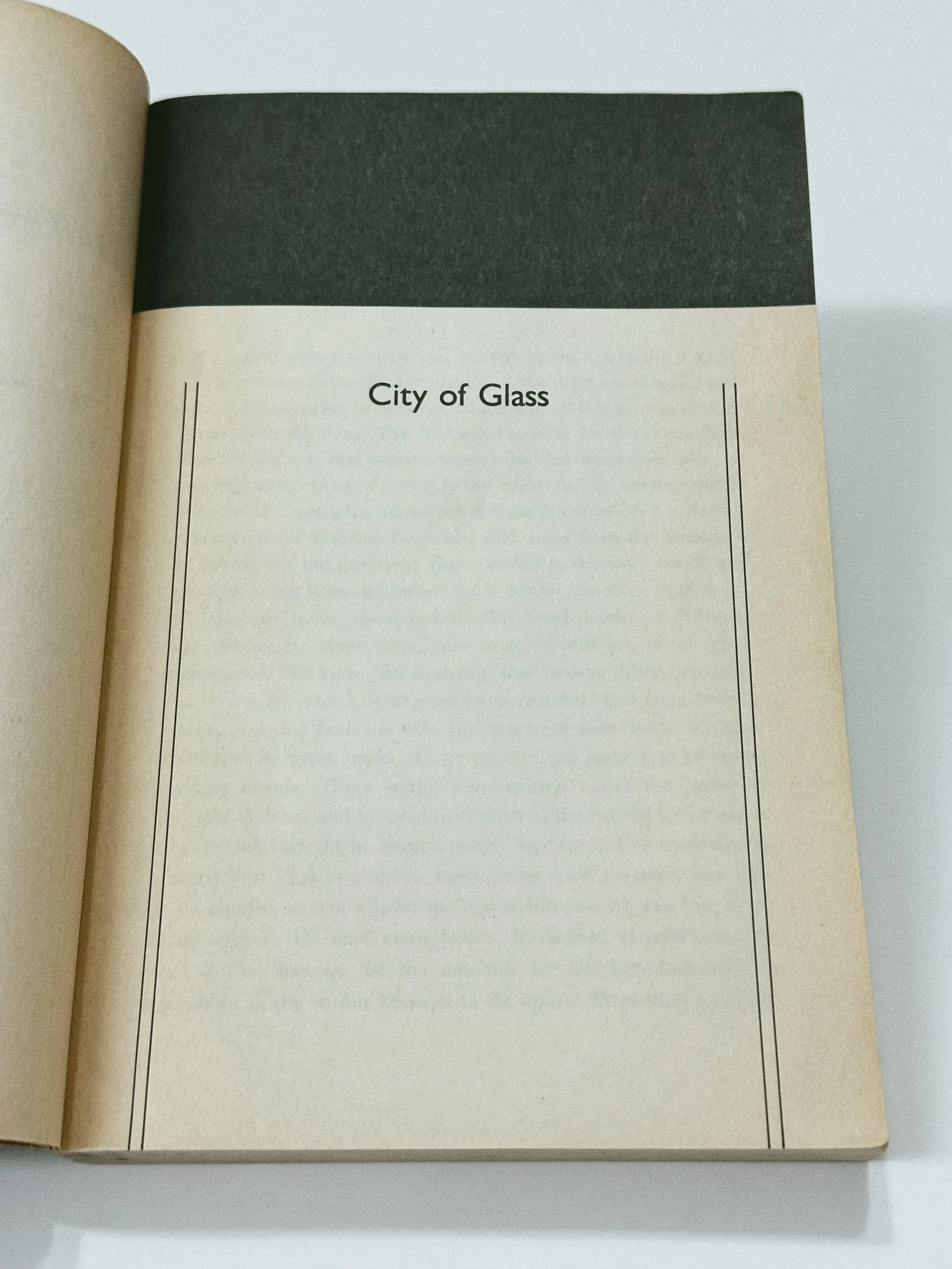
City of Glass, the first installment of Auster’s New York Trilogy, is narrated by Quinn, who writes detective stories under the pen name William Wilson.
Late one night, the telephone rings in his apartment and a stranger’s voice asks for Paul Auster. Calls repeat for several nights. The stranger insists on speaking to Auster and finally Quinn’s curiosity is piqued and he decides to impersonate him. Thus he embarks on a quest more mysterious than any William Wilson ever crafted for his audience.
I bought my copy of Auster’s trilogy secondhand during my grad school years, when I was down and out in New York, sharing a small apartment on Avenue A with three other roommates.
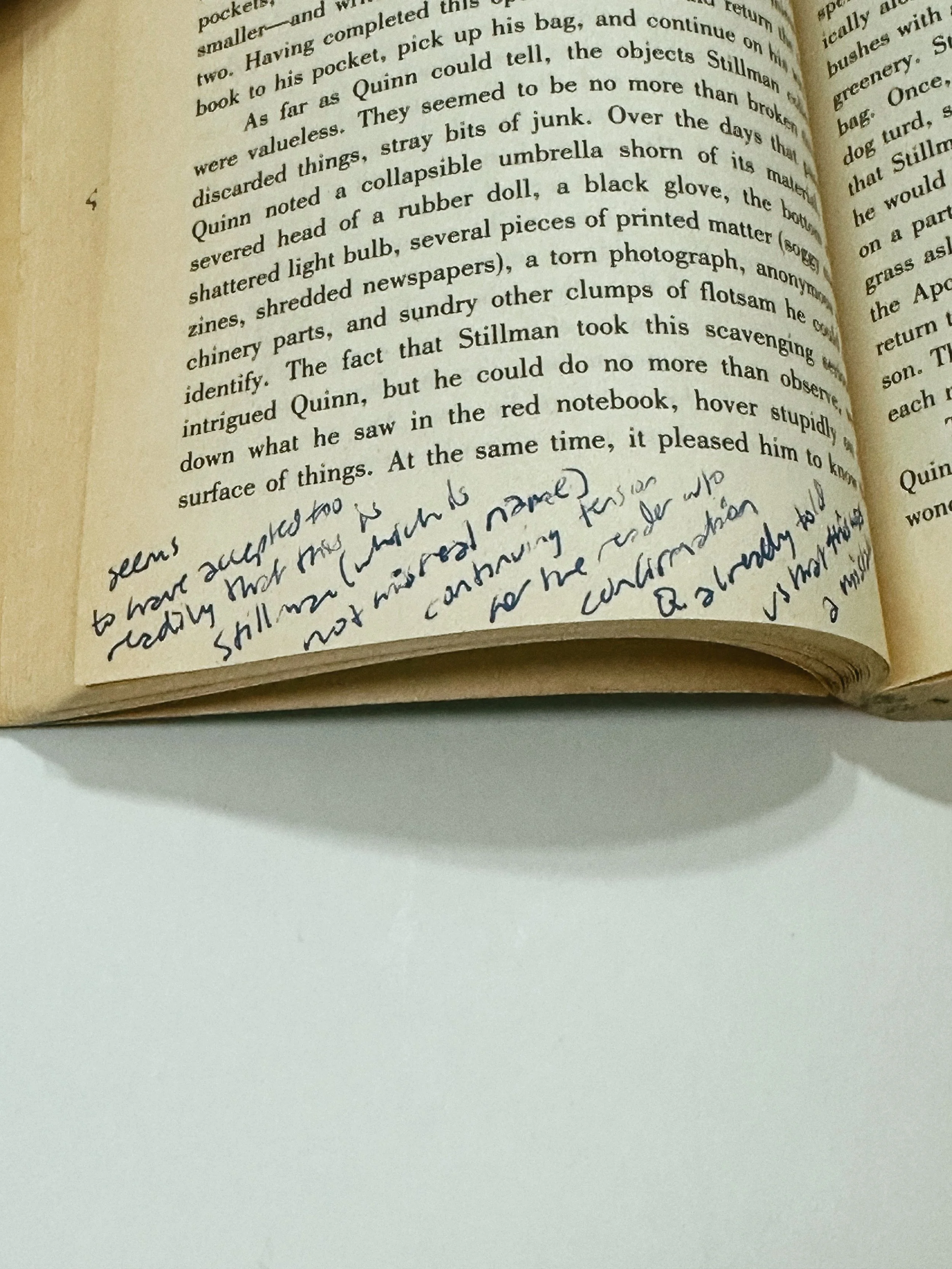
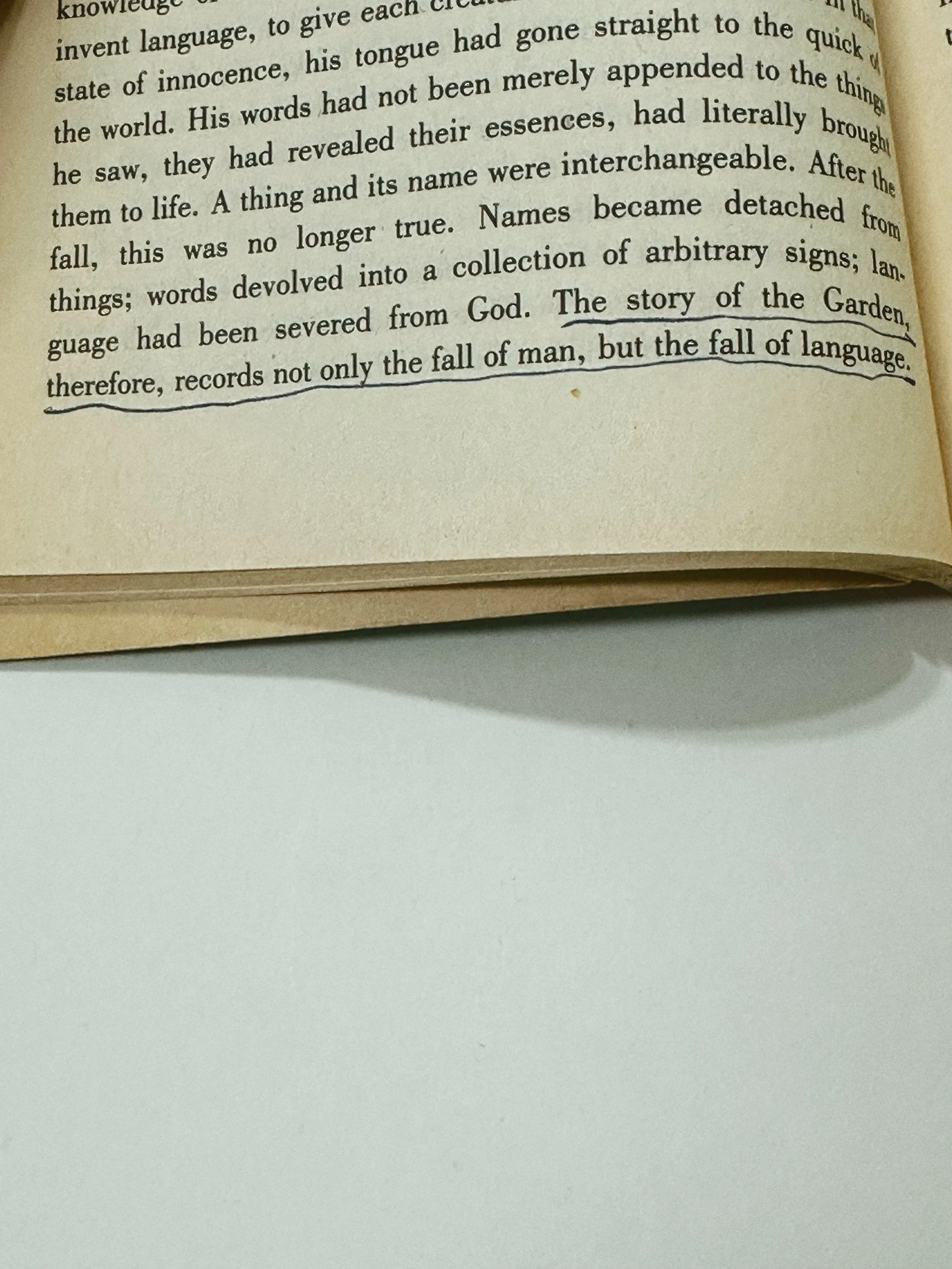
I remember standing in the bookstore, holding the book in my hands, frowning as I flipped through the pages and seeing there was some underlining of passages in blue ink and sometimes notes on the margins, which is something I never allow myself to do out of respect for my books.
However, I have to admit that this particular reader was so subtle and astute in her observations that her dialogue with the text feels almost like a fourth voice, dreamt up by Auster to create yet another mirror to disorient the reader in his maze of voices and images.