Gracias Club Fotográfico de Guatemala por invitarme a presentar mi proyecto más reciente “BLINDNESS” dentro del marco de la Semana Fotográfica Centroamericana y del Caribe.
Nos vemos el martes 24 de septiembre vía Zoom!
© Jaime Permuth, 2025
Gracias Club Fotográfico de Guatemala por invitarme a presentar mi proyecto más reciente “BLINDNESS” dentro del marco de la Semana Fotográfica Centroamericana y del Caribe.
Nos vemos el martes 24 de septiembre vía Zoom!
Even as a grown man, living far-away from Guate, my mom would call me every year on my birthday and sing to me.
I remember vividly how, as a toddler, Bertha would pick me up and dance a mambo with me huddled in her arms. How many meals did she cook for me over the years? How many books did she read to me before I could read on my own? I recall how carefully she chose the clothing she bought for me as a child and how well she knew my taste, respected it and tried her best to indulge me in it. I can still feel on my skin the hugs and kisses she gave on a daily basis, how she loved to hold onto my arm and squeeze it tight when we walked together.
Most of all, I miss her crystal clear gaze when I spoke. And how every word I said seemed to register somewhere deep inside her.
I respected, cherished, and loved her so deeply. Four years after her passing, I miss her more than ever.
I know I will never pick up the phone again in January and hear her song.
But I’m thankful for all the years that I did.
We arrive at the master bedroom. And here, there’s a little riddle for you to decipher. I’ll give you a clue: it’s a quote that comes from a 1949 book by E. B. White entitled Here is New York. And the first line starts: “The capacity to make such dubious gifts…” See if you can come up with the end of that quote. Good luck :)
***
우리는 이제 침실에 도착했습니다. 여기서 당신이 풀어야 할 작은 수수께끼가 있습니다. 힌트를 드릴게요: 이 인용구는 작가 이.비. 화이트(E. B. White)의 1949년 책 여기 뉴욕('Here is New York')에서 나온 것입니다. 첫 줄은 이렇게 시작됩니다: “이러한 의심스러운 선물을 만들 수 있는 능력…”(“The capacity to make such dubious gifts…”) 이 인용구의 끝부분을 맞춰보세요. 행운을 빕니다 :)
Let’s walk over to the bookcase in the living room and look together at the framed black and white photographs. They are taken from my series Tarzan Lopez, one of my earliest photographic projects documenting the life of Guatemala’s largest family traveling circus, El Circo Rey Gitano. For the better part of three years, on and off, I had a chance to travel with them throughout the whole country of Guatemala, my native country, and see it through their eyes. It was magical. It was life changing. And the experience will always stay with me.
If you turn around you’ll see framed color works. These are by my wife Hye-Ryoung Min from her series
Re-membrance of the Remembrance, based on a lifetime of keeping personal diaries.
***
벽에 걸린 사진들
거실의 책장 쪽으로 가서 함께 액자에 담긴 흑백 사진들을 보세요. 이 사진들은 제 초기 사진 프로젝트 중 하나인 ‘타르잔 로페즈(Tarzan Lopez)’ 시리즈에서 찍은 것입니다. 이 시리즈는 과테말라에서 가장 큰 가족 서커스인 ‘엘 시르코 레이 기타노(El Circo Rey Gitano)’를 기록한 작업입니다. 거의 3년 동안, 간헐적으로, 저는 그들과 함께 과테말라 전역을 여행할 기회를 가졌고, 그들의 시선을 통해 제 고향을 볼 수 있었습니다. 그 경험은 마법 같았고, 인생을 변화시켰습니다. 그리고 그 기억은 항상 제게 남을 것입니다.
뒤를 돌아보시면 칼라로 된 액자 작품들이 보일 겁니다. 이 작품들은 제 아내 민혜령의 ‘기억의 재구성(Re-membrance of the Remembrance)’ 시리즈로, 평생 써온 개인 일기를 기록한 내용을 바탕으로 한 작업입니다.
Join me over here at the dining room table, by the big picture window with the view of the mountains. There’s a group of cyclists coming down the road: a man, another man, two women and one final rider -another man- closing out the peloton. They are coming back from Myeongdol, one of the best climbs in Korea, maybe heading out to Seojong for a little lunch. When I’m working in the garden some days and see cyclists coming I just wanna drop everything I’m doing and hop on my bike and join them.
***
여기 식탁에 와서, 큰 창문 옆에 앉아 산을 바라보세요. 도로를 내려오는 자전거 타는 사람들 무리가 보입니다: 한 남자, 또 다른 남자, 두 여성, 그리고 마지막 라이더—또 다른 남자가 페로톤(자전거 경주 그룹)을 마무리하고 있습니다. 그들은 한국 최고의 오르막 중 하나인 명달고개에서 돌아오고 있는 중일 거예요. 아마도 간단한 점심을 위해 서종으로 향하고 있을 수도 있습니다. 내가 정원에서 작업하고 있을 때 자전거 타는 사람들이 오는 걸 보면, 그냥 모든 일을 내려놓고 자전거를 타고 그들과 함께하고 싶어집니다.
Hello, and welcome to our home. This is your home too. That big blue door, let me tell you a story about it. That shade of blue is my mother’s favorite blue, which she saw for the first time when she visited La Casa Azul, painter Frida Kahlo’s home in Mexico City. When you walk through that door, you walk back to Mexico City, and you also walk back to New York City, where we used to live for many years.
In that sense, it’s a place inside another place. Come in, let’s get to know each other better.
***
안녕하세요, 우리 집에 오신 것을 환영합니다. 이곳은 당신의 집이기도 합니다. 저 큰 파란 문에 대해 이야기해 드릴게요. 그 파란 색은 제 어머니가 가장 좋아하는 색인데, 그녀가 처음 그 색을 본 것은 멕시코 시티에 있는 화가 프리다 칼로의 집, 라 카사 아술(La Casa Azul)을 방문했을 때입니다. 그 문을 지나면 멕시코 시티로 돌아가고, 또한 우리가 오랫동안 살았던 뉴욕시로 돌아가는 것과 같습니다.
그런 의미에서 이곳은 다른 곳 안의 또 다른 장소입니다. 들어오세요, 서로 더 잘 알아가 봅시다.
Artista Invitado / Bienal de La Habana / 2024
Invited Artist / Havana Biennial / 2024
Ten years ago, in 2014, Katrin Eismann, my Department Chair at SVA, and I traveled to Havana invited by La Fototeca de Cuba to present Artist Talks during the Mes de la Fotografía (Month of Photography).
This first encounter with the legendary city and its people profoundly impacted me, and in the following years, I returned to the island several times more.
On these trips, I always had to balance my artistic concerns with the responsibilities of being an educator traveling with students. For the most part, the Cuban photographs I have taken to date are illuminated by the first rays of dawn - or are deeply nocturnal. In both cases, they are the result of the time I managed to carve out for myself before or after my professional obligations took over. Stolen pictures, if you will.
It has always been a dream of mine to return to the island to pursue a personal project. I am so grateful and thrilled to travel to Cuba commissioned by the Bienal de La Habana to create such a project.
This November, I will be an Artist in Residence at Punto Naranja, Quisicuaba. And of course, I don’t go there only on my own behalf but representing my native country of Guatemala as well.
Happy to teach a three week, three session workshop for Gwanghapdan Art Collective! We’ll be shooting on the street, editing a sequence of images and making zines from the experience.
Language of instruction: English.
Join us in Seoul!
Luca and Olin are consumed by their passions. Starting a few months back, their newest obsession became entomology and the world of insects.
If we let them have their way, they’d be out all day and half the night poring over leafy plants, climbing tree branches and looking under rocks for new specimens.
But when they can’t be out catching insects they stay in reading books about them or sketching them over and over again in their notebooks.
Sometimes, when they are learning to draw a new insect they ask us to make a print from an online photo they like. Then they lean up against the windows and use the backlight from the sky to trace their outline.
The day finally arrived for us to welcome our first guests to Jaime Stay Seojong. The houses reflect our own story as a family, bringing together elements of classic New York brownstone architecture with vibrant colors and carefully handpicked objects from Latin America. And throughout a special emphasis on the beauty of natural light which is the heart and soul of our photographic practice.
It’s been a three-year process to arrive at this day. All I can say is Luca and Olin houses looked resplendent and that we hope our guests will have a truly memorable visit.
When we moved from NYC to Korea we had a dream of finding land somewhere in the countryside - within striking distance of Seoul - where we could build a home.
A few months after arriving here, we first visited the small town of Seojong and found a field in a larger tract of farmland which was being offered for sale. We felt a sense of peace and belonging in that valley, crossed by a stream and surrounded by rolling hills and mountains. We took a deep breath and purchased the land. Our next step was to find the right architect to help us realize our vision. We partnered with the award-winning, stellar firm 100A.
For the better part of three years we have worked on building symmetrical, twin houses in Nomun-ri, one named Luca and the other Olin. Their design is inspired by our own lives: highlighting the beauty of light which guides us as photographers, weaving elements of New York City brownstone architecture with color and objects from Latin America. We are now ready to open our home to all of you as Jaime Stay.
Come for a visit soon!
It seems like my whole life people told me I’m a lucky guy.
Don’t I know it ~
Brooklyn days with HRM
Gwanghapdan is celebrating the Museum of Fine Arts Houston’s acquisition of our zines 1 through 16, our complete production to date which will become a part of the museum’s Research Library and Archive.
Thank you Jon Evans and Anne Tucker for making this happen. We are so thrilled and honored!
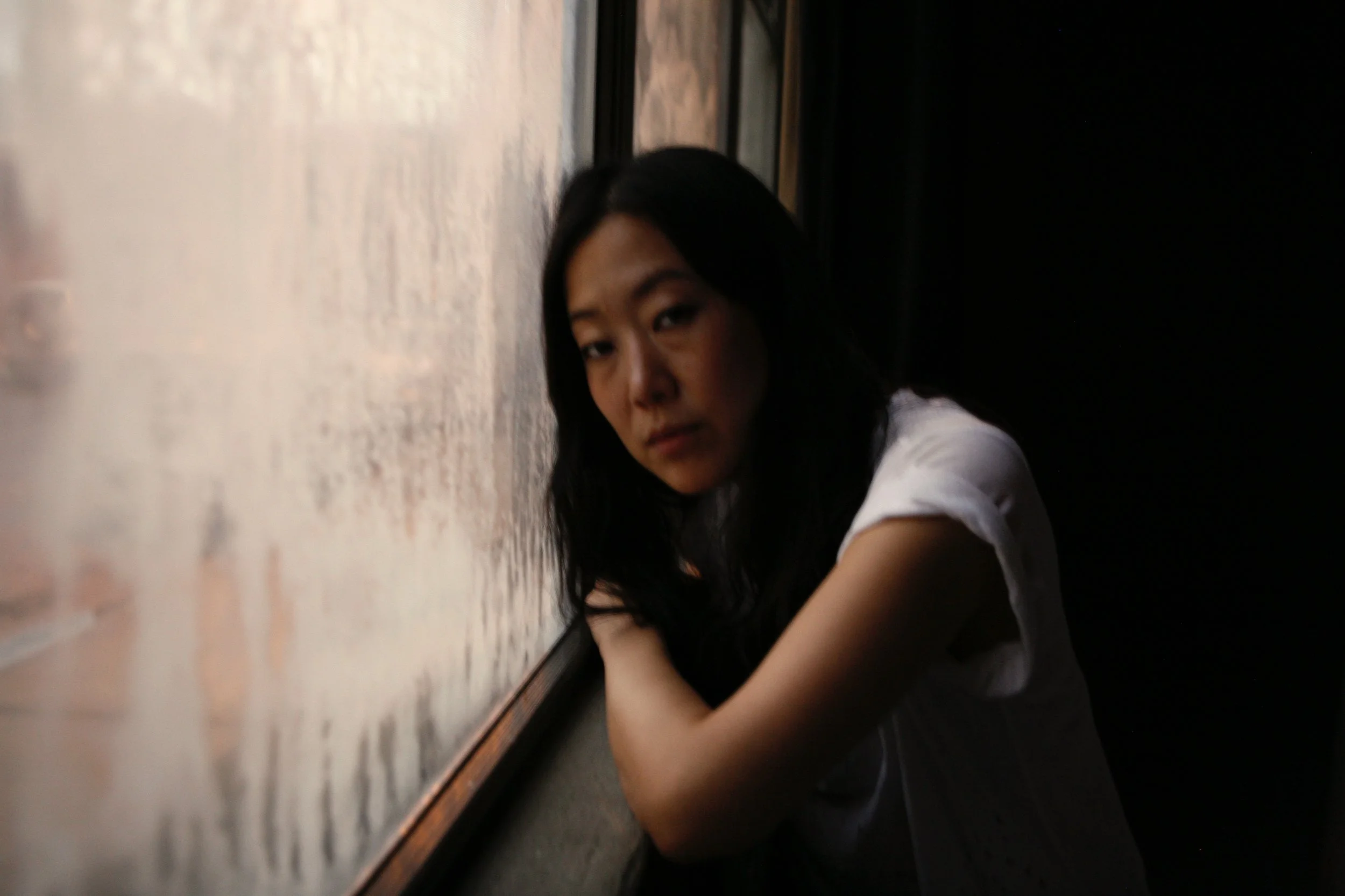
Blindness can take many forms. Physically, it is the affliction of being born sightless or losing sight later in life.
Figuratively, one might think of Milton’s darkness visible, which the poet uses to describe the hell which awaits Lucifer when he falls from grace.
Blindness can also be a self-inflicted punishment, as in Sophocles’ Oedipus Rex who puts out his own eyes to atone for an unspeakable sin.
Saramago’s epic novel opens at traffic light, where the first victim of a mysterious pandemic suddenly loses the ability to see. Chaos quickly ensues and then proceeds to engulf the city, bringing society to the very edge of cataclysm, only to lift again suddenly and inexplicably.
More broadly, blindness could refer to the human condition: to the ability to see but not comprehend. Think of a newly arrived immigrant unable to read or speak the language of her new home, trying desperately to navigate and adapt to a different culture.
An artist might feel paralyzed by losing his sense of wonder. Unable to break free from his own visual language and habitual practice, how can he seek out new avenues of expression or fresh lines of sight?
On a personal level, I might add that a photographer knows no greater fear than blindness.
And for that very reason, it is a subject worthy of artistic exploration.
First there were cars, then cars that transformed into robots, sharks followed and afterwards dinosaurs. Godzilla suddenly became a thing, including heavy metal soundtracks. Next, sharks came back in vogue with a vengeance.
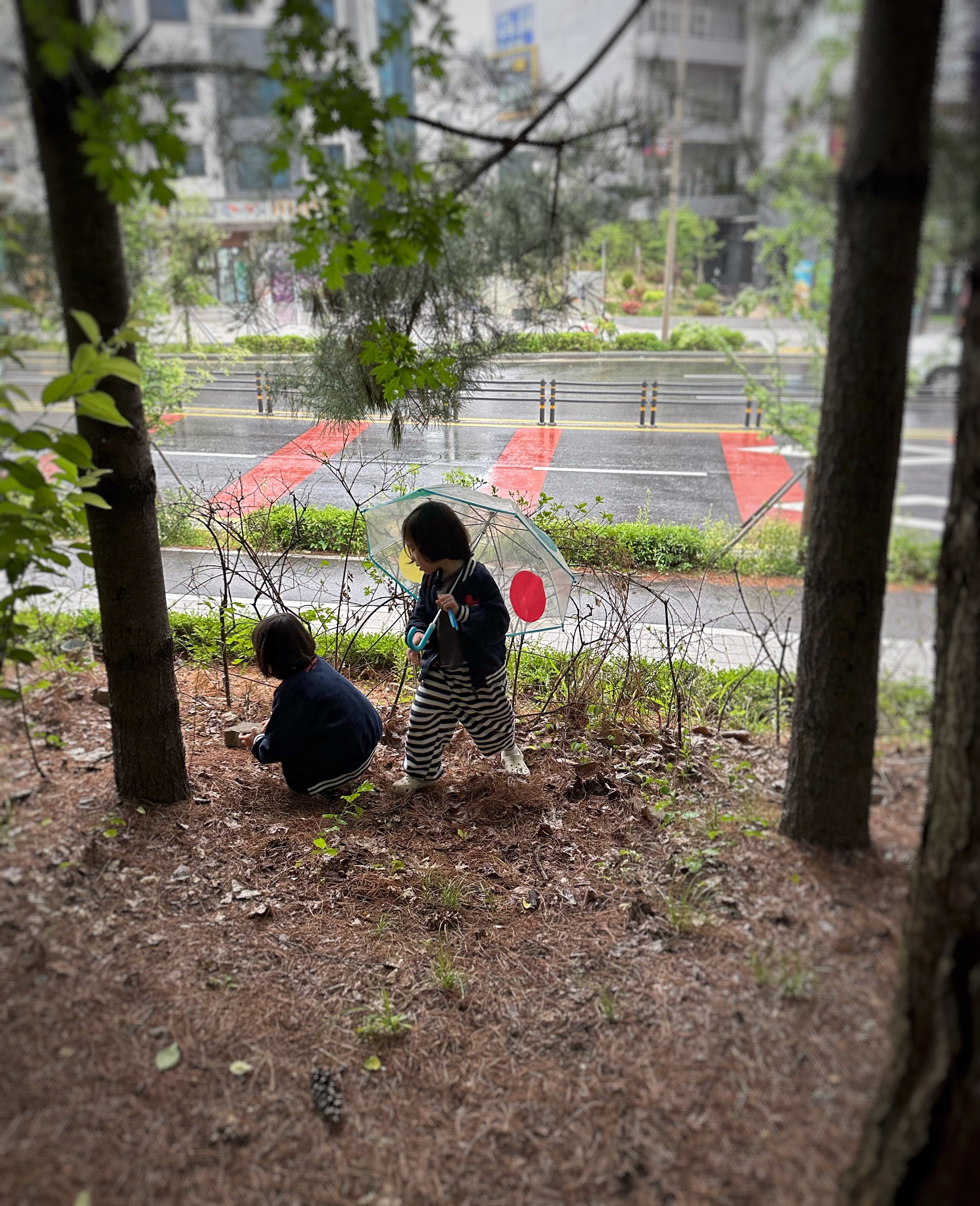
And now it’s all about insects. Olin and Luca have done a deep dive into all aspects of this form of animal life. They can watch documentaries endlessly, draw them from books or from memory, and fold complicated origami versions of their favorites. But without a doubt, rain or shine searching for them in gardens, parks and wooded areas is their favorite thing to do.
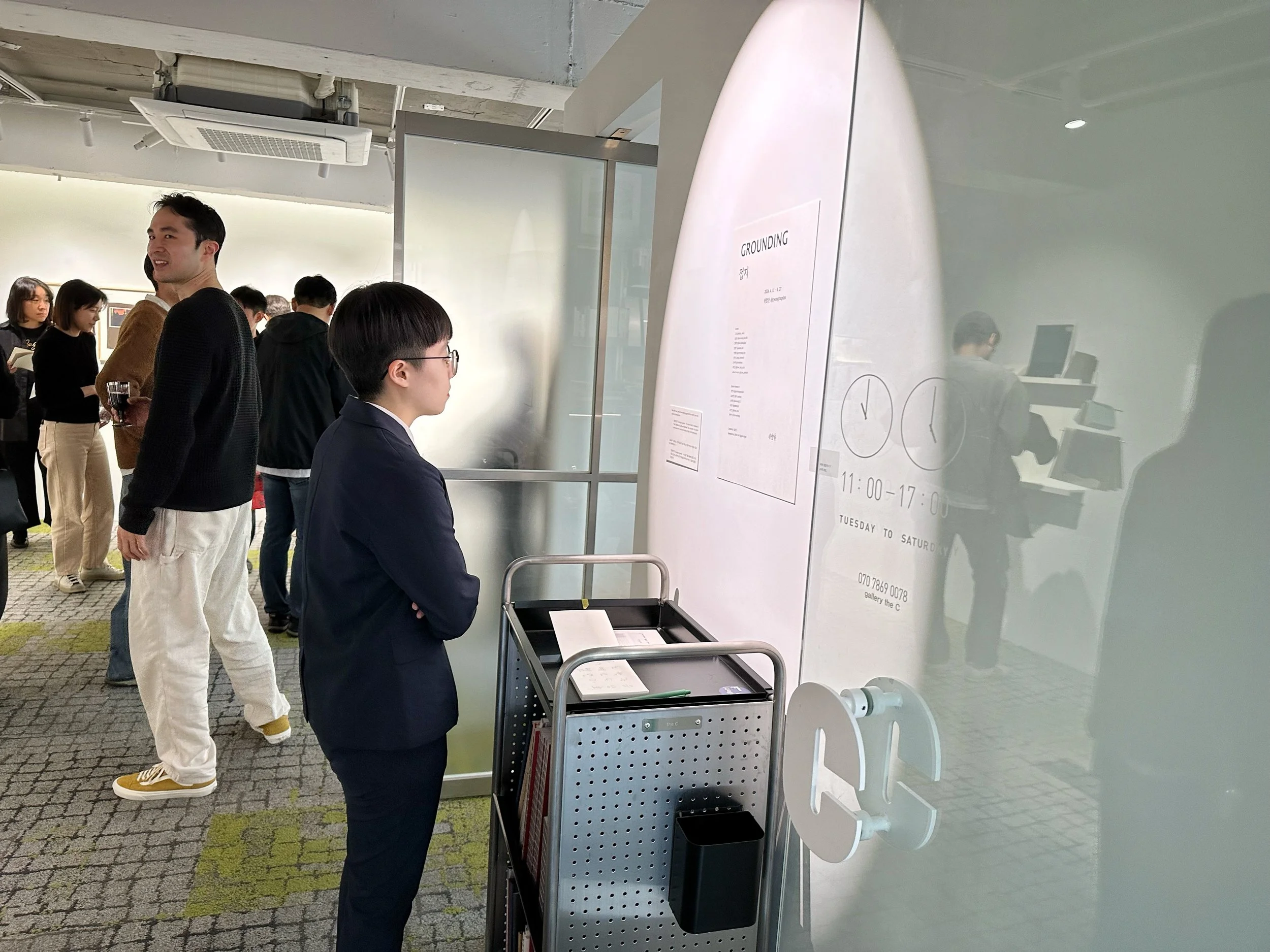
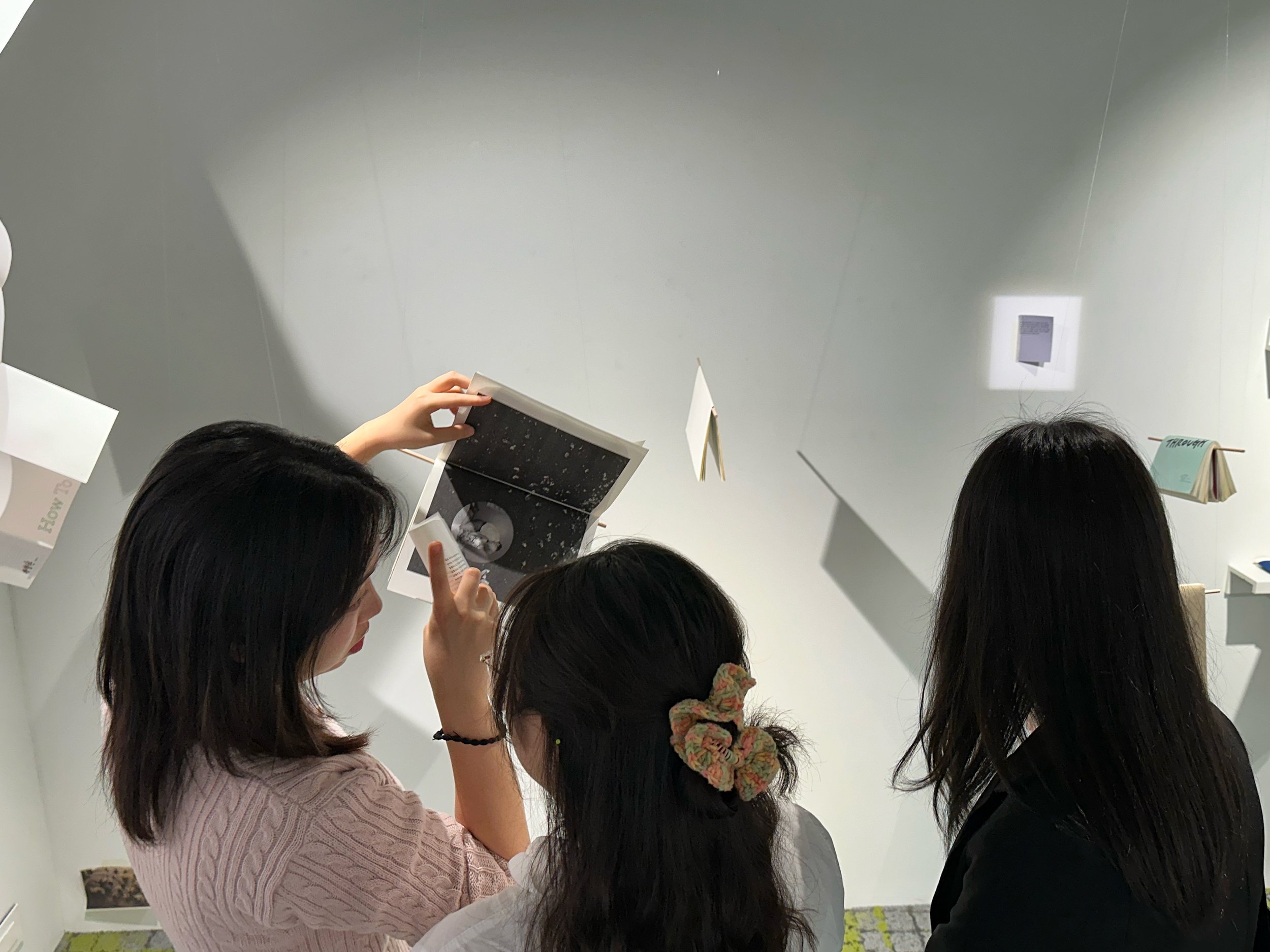
Opening Night for Gwanghapdan Art Collective “Grounding” exhibition at Gallerythec in Seoul, Korea.
Thanks to all who attended ~
I started to shower, then a knock on the door. “Papi, I need to pee”. “oK, Olin. Come in”. “No, I don’t like it when it’s wet”.
I finished washing in record time, squeegeed the floor dry and let him in.
When I was done dressing, Olin was waiting for me outside the door.
“Papi, let’s play!”
“oK, gordo. Give me a second”.
After dropping my pj’s in the hamper, I reached for the French press and yesterday’s leftover coffee. About to pour myself a cup, Olin again:
“Papi, let’s play!!”
“oK, Olin. I’m coming…”
“No Papi, you’re going”.
Touché ~
A few weeks ago, I was invited to become a member of Gwanghapdan, a collective of Korean artists.
Although I’ve been an artist all of my adult life and I’ve been an integral part of various communities through the years, being part of a collective is a first for me.
Attending my first meeting as a member, I was surprised and honored to be asked to edit the coming issue of our monthly zine.
I proposed the theme of “Blindness”. When the submissions started coming in, I was blown away by the quality of the works. I presented the completed dummy today and next month it will become available through Gwanghapdan and Same Dust Bookstore.
“Look at this” is how us, photographer fathers, like to teach our children about the world. But photographer Frank Espada, father of poet Martin Espada, knew that looking - and understanding - should be followed by action.
Here’s Martin’s poem, remembering his father.
—-
Look at This
My father spoke: Look at this, he said to me. We were walking throughan alley from somewhere to somewhere else in Brooklyn. In front of us, a man with white hair and a white beard reached into a dumpster, plucked out a bag of potato chips, stuffed his arm up to the elbow in the bag, let it flutter to the pavement at his feet, and shuffled ahead.
Look at this, my father said again. Sometimes, he would repeat himself.He walked up behind the white-haired man, called Good morning, sir! so the other man wheeled around to see us, shook his hand and left a twenty-dollar bill in the handshake, all without slowing down.
We never spoke of it again. The day we left Brooklyn, he drove away away so fast he left a stack of his 78s in the closet of the apartment in the projects. Look at this was all he said, and all he had to say. Look.
Last night it was -4C and today the temps rose and rose until they reached a blissful 16C.
Was it a little Hanukkah miracle? Possibly. It sure was a gift!
Chag Sameaj!